 By Saurav Mehra
 In a world where data is the most valuable business asset, the companies entrusted with managing it carry an enormous responsibility. Indian IT firms like TCS, Infosys, Wipro, HCL Technologies, and Tech Mahindra collectively serve thousands of global clients across banking, healthcare, insurance, retail, and government sectors. They process payroll data, patient records, financial transactions, intellectual property, and customer information for some of the world’s largest organisations.
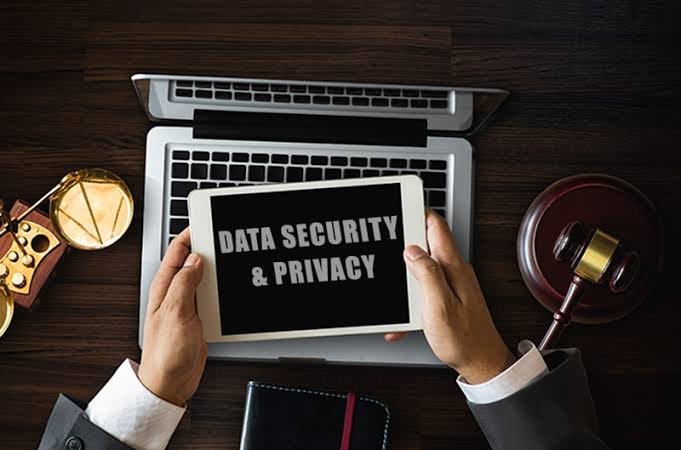
Why Data Security Is Non-Negotiable for IT Outsourcing
Global clients face a dual threat. Internal data breaches from negligent or malicious employees, and external attacks from increasingly sophisticated cybercriminals and nation-state actors.
When a client outsources work to an Indian IT firm, their data crosses borders, travels across networks, sits in offshore delivery centres, and is accessed by thousands of employees across shifts. Each of these touchpoints is a potential vulnerability.
A single breach can cost the client billions in regulatory fines, reputational damage, and customer trust. This is why data security is not a feature that IT firms offer — it is the foundation without which no engagement can exist.
The Compliance Framework
Top IT firms build their security architecture around internationally recognised standards and regional regulations.
ISO 27001
The most widely adopted information security management standard globally. It requires companies to identify information assets, assess risks, and implement controls systematically. Most major Indian IT firms are ISO 27001 certified across their global delivery centres.
SOC 2 Type II
A US-based audit standard particularly important for clients in financial services and healthcare. It certifies that a company’s security, availability, processing integrity, confidentiality, and privacy controls have been tested over a period of time, not just at a single point.
GDPR Compliance
For clients in Europe, the General Data Protection Regulation sets strict rules on how personal data is collected, processed, stored, and transferred. Indian IT firms handling European client data must comply with GDPR, including data residency requirements and breach notification timelines.
HIPAA
For healthcare clients in the United States, the Health Insurance Portability and Accountability Act governs protection of patient health information. IT firms handling hospital systems, insurance claims, or medical records must maintain HIPAA-compliant environments.
PCI DSS
For clients in financial services and retail where payment card data is processed, Payment Card Industry Data Security Standard compliance is mandatory.
Maintaining all these certifications simultaneously requires dedicated compliance teams, regular third-party audits, and continuous monitoring.
Physical Security at Delivery Centres
Data security begins before a single line of code is written. Physical access controls at offshore delivery centres are often more rigorous than clients expect.
Standard physical security measures include:
- Biometric access at every entry and exit point
- Tiered access zones where only authorised employees can enter specific areas
- CCTV surveillance with footage retention of 90 days or more
- Anti-tailgating systems that prevent unauthorised entry behind authorised personnel
- Clean desk policies where no papers, devices, or notes are left unattended
- Prohibition on personal mobile phones in secure project areas
- Visitor management systems with escort requirements
For highly sensitive projects like defence contracts or banking core systems, some firms operate air-gapped environments where networks are completely isolated from the internet.
Network and Endpoint Security
The technical architecture protecting data in transit and at rest is equally sophisticated.
Data Encryption
All data in transit between client systems and delivery centres is encrypted using industry-standard protocols. Data at rest on servers and storage systems is also encrypted to prevent exposure during physical theft or unauthorised access.
Zero Trust Architecture
Leading IT firms have adopted the Zero Trust model, which operates on the principle of never trust, always verify. Every user, device, and application must authenticate continuously, regardless of whether they are inside or outside the corporate network.
Multi-Factor Authentication
All access to client environments requires multiple authentication factors. Simple passwords are insufficient.
Data Loss Prevention Tools
DLP software monitors and controls data transfers. It can detect and block attempts to copy sensitive data to external drives, personal email, or cloud storage.
Virtual Desktop Infrastructure
For highly sensitive client projects, employees work on virtual desktops hosted on secure servers rather than local machines. Data never actually resides on the employee’s physical device.
Employee Security Training and Culture
Technology alone cannot guarantee security. Human behaviour remains the most significant vulnerability in any security framework.
Top IT firms invest heavily in building a security-conscious workforce.
- Mandatory annual security awareness training for all employees
- Simulated phishing attacks to test and improve employee vigilance
- Background verification checks before onboarding, including criminal records, educational credentials, and previous employment
- Non-disclosure agreements signed before any client project access
- Role-based access control ensuring employees only see data relevant to their specific work
- Insider threat monitoring programs that detect unusual data access patterns
Employee security culture is tested constantly. A developer who clicks a simulated phishing link is immediately given targeted training rather than punishment, reinforcing awareness over fear.
Incident Response and Breach Management
Despite best efforts, no security system is completely immune. What separates world-class IT firms is how they respond when something goes wrong.
Top firms maintain dedicated Security Operations Centres (SOCs) that monitor systems around the clock across all global delivery locations. Automated threat detection systems flag anomalies in real time.
A structured incident response framework typically covers:
- Immediate containment of the breach
- Client notification within agreed timelines
- Forensic investigation to determine the breach’s origin and scope
- Remediation and patching of the vulnerability
- Post-incident review and improvement of controls
Most global contracts specify breach notification timelines, often within 24 to 72 hours of discovery. GDPR requires notification within 72 hours regardless of contract terms.
Vendor and Supply Chain Security
Large IT firms do not operate in isolation. They work with hundreds of sub-vendors, cloud providers, software licensors, and specialist contractors. Each third party is a potential entry point for attackers.
Managing supply chain security involves:
- Rigorous third-party security assessments before vendor onboarding
- Contractual security obligations for all vendors handling client data
- Regular audits of critical vendors
- Limiting vendor access to only the systems they specifically need
- Termination protocols that revoke access immediately when contracts end
The SolarWinds attack of 2020, where a compromised software update affected thousands of organisations globally, made supply chain security a boardroom priority for every major IT firm.
Cloud Security
As more client workloads migrate to cloud platforms, IT firms have built dedicated cloud security capabilities.
Working across AWS, Microsoft Azure, and Google Cloud, they implement:
- Cloud security posture management to continuously check configurations
- Identity and access management with least-privilege principles
- Automated compliance checks against regulatory frameworks
- Encryption of data across all cloud storage and compute services
- Separation of client environments to prevent cross-contamination
Many firms have developed proprietary cloud security platforms and tools that they apply consistently across client environments.
What Global Clients Actually Audit
Major global clients do not simply trust certifications. They conduct their own security assessments before signing contracts and periodically throughout the engagement.
Common client audit activities include:
- On-site security audits of delivery centres
- Penetration testing of IT firm networks and client-facing applications
- Review of access logs and employee background verification records
- Testing incident response procedures through tabletop exercises
- Verification of data deletion processes after contract termination
Indian IT firms have dedicated client assurance teams that manage these audits professionally, treating them as opportunities to demonstrate maturity rather than obstacles to avoid.
The Role of AI in Future Security
Security threats are evolving faster than human analysts can track. Artificial intelligence is becoming central to how top IT firms defend data.
AI-powered security tools can:
- Detect anomalous user behaviour before it becomes a breach
- Analyse millions of security events simultaneously to identify attack patterns
- Automate routine threat response, freeing analysts for complex investigations
- Predict likely attack vectors based on threat intelligence data
- Monitor dark web activity for signs of client data exposure
Firms like TCS, Infosys, and Wipro have all invested in proprietary AI security platforms and partnerships with global security intelligence providers.
Final Thoughts
Data security for global clients is not a department within top Indian IT firms. It is a pervasive discipline embedded in every layer of operations, from the physical design of delivery centres to the behavioural norms of every employee.
The trust that global clients place in Indian IT firms is built over years of consistent, demonstrated security performance. One major breach can undo a decade of relationship building. This asymmetry is why leading firms invest continuously in security capabilities even when no immediate threat is visible.
As cyber threats grow more sophisticated and regulation more stringent, the security capabilities of IT service providers will increasingly determine which firms win and retain global mandates. In the data economy, security is not just a cost of doing business. It is the business.
FAQs
Q1. What is the most common cause of data breaches in IT outsourcing?
Human error and insider threats remain the leading causes, followed by phishing attacks and misconfigured cloud environments.
Q2. Do Indian IT firms store client data in India or abroad?
It depends on client requirements and regulatory frameworks. Many clients require data residency in specific countries, which IT firms accommodate through regional data centres.
Q3. What is a SOC and why does it matter?
A Security Operations Centre monitors all systems in real time for threats. It is the frontline defence against breaches across global delivery networks.
Q4. How do IT firms handle data when a contract ends?
Data deletion protocols are contractually defined. Certified data destruction or return to the client is standard, with audit trails provided as proof.
Q5. Are smaller IT firms as secure as the top companies?
Generally not. Smaller firms have fewer resources for certifications, dedicated security teams, and advanced tools, which is why large global clients typically prefer established players for sensitive work.
Q6. How does Zero Trust differ from traditional network security?
Traditional security trusted users inside the network. Zero Trust assumes no one is trusted by default and requires continuous verification of every access attempt.
Q7. Can clients bring their own security tools into IT firm environments?
Yes. Many enterprise clients deploy their own monitoring agents, DLP tools, and access management systems within dedicated IT firm environments as an additional layer of oversight.